















Guides · Best toothpaste for kids & babies
Best toothpaste for kids & babies
Compare by age, fluoride status, label and cavity risk: buddy microbies for 0+ or evolution kids for 3–14. Then choose the formula that fits your dentist's guidance.
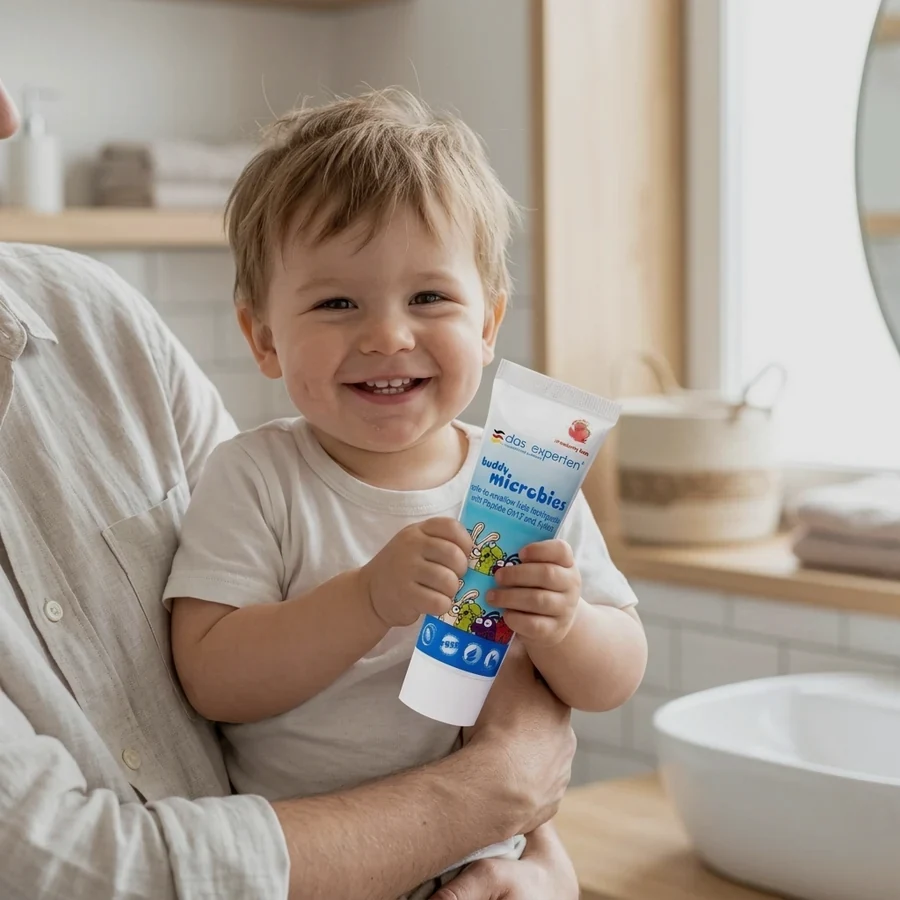
The ADA and AAPD recommend brushing twice daily with fluoride toothpaste: a rice-grain-sized smear for children under 3 and a pea-sized amount for ages 3–6, with adult supervision. buddy and evolution kids are fluoride-free according to their labels; that is not permission to swallow toothpaste and does not replace fluoride guidance.
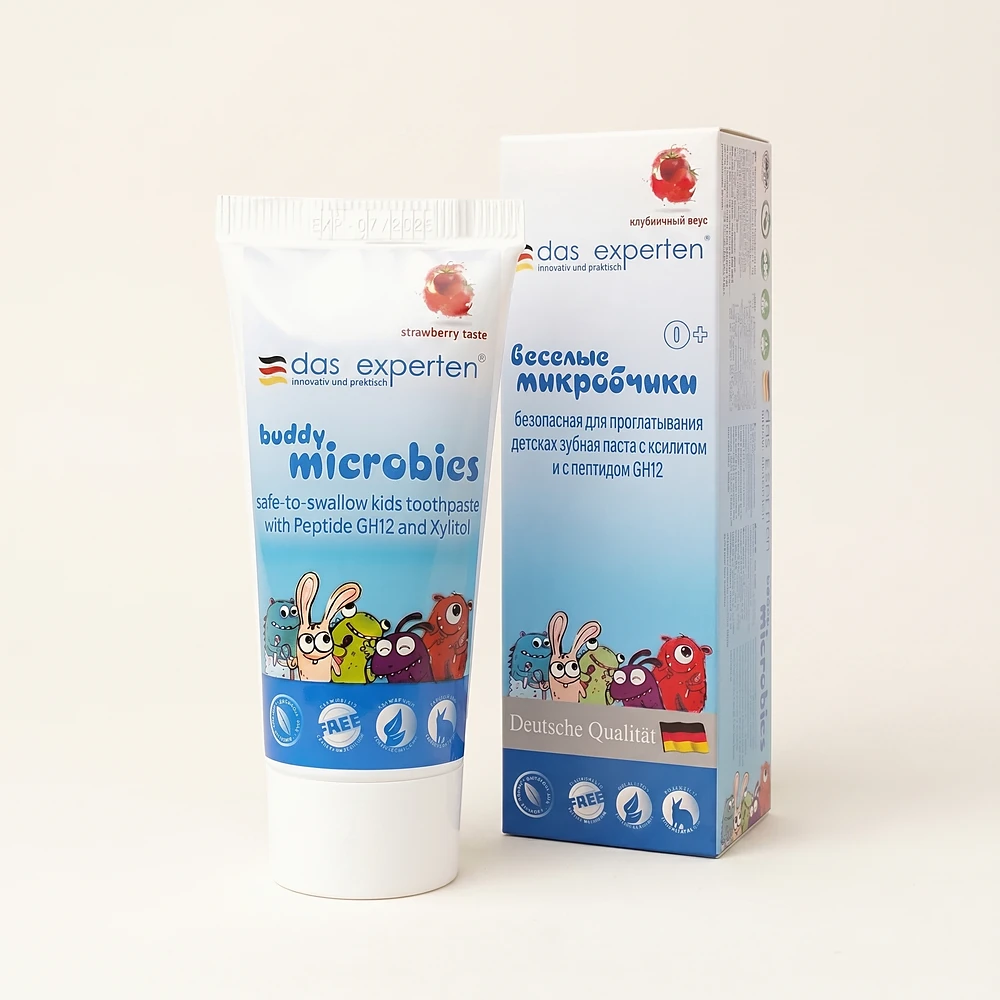
Labeled for ages 0+ and lists GH12 peptide and xylitol. It is fluoride-free according to the label; compare the formula with fluoride guidance and the child's cavity risk before buying.
See buddy microbies details →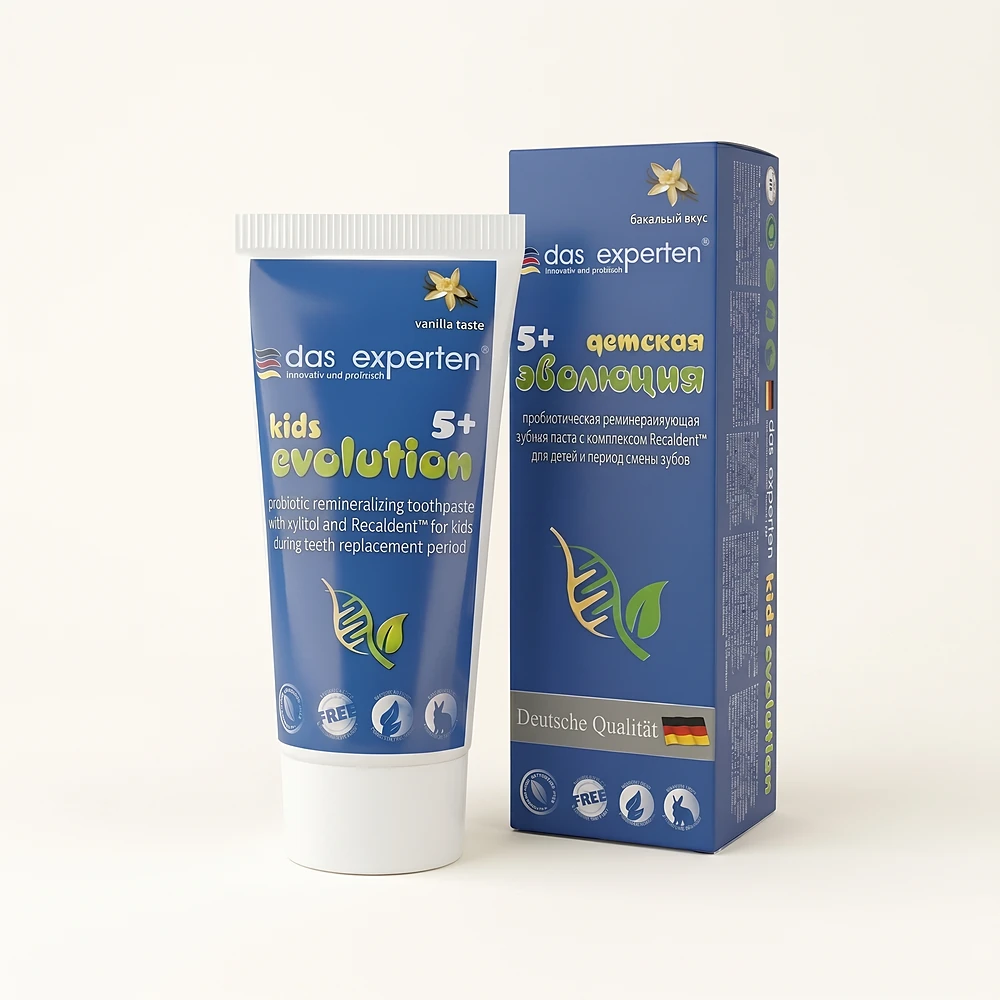
Labeled for ages 3–14 and lists milk-derived CPP-ACP (Recaldent™) and B. coagulans. It is fluoride-free; do not use it with a diagnosed milk-protein allergy or treat the ingredient list as proof that it repairs enamel lesions.
See evolution kids details →How much toothpaste should a child use?
Use the amount recommended for the child's age, supervise brushing and ask a dentist to account for individual cavity risk and other fluoride sources.
FAQ
Can a baby swallow toothpaste?
Toothpaste should not be swallowed deliberately. Supervise brushing, follow the label and ask a dentist which fluoride level and amount fit the child's age and cavity risk.
What's the difference between buddy and evolution kids?
buddy is labeled 0+ and lists GH12 peptide and xylitol; evolution kids is labeled 3–14 and lists milk-derived CPP-ACP and B. coagulans. Both are fluoride-free according to their labels, so include fluoride guidance and cavity risk in the choice.
My child has braces — which one?
Ask the child's dentist or orthodontist. Braces can raise plaque and white-spot risk, and an ingredient list alone does not prove that a toothpaste treats lesions.
My child's gums bleed when brushing — is that normal?
Repeated or persistent bleeding should be checked by a dentist. Do not rely on toothpaste alone to diagnose or treat the cause.